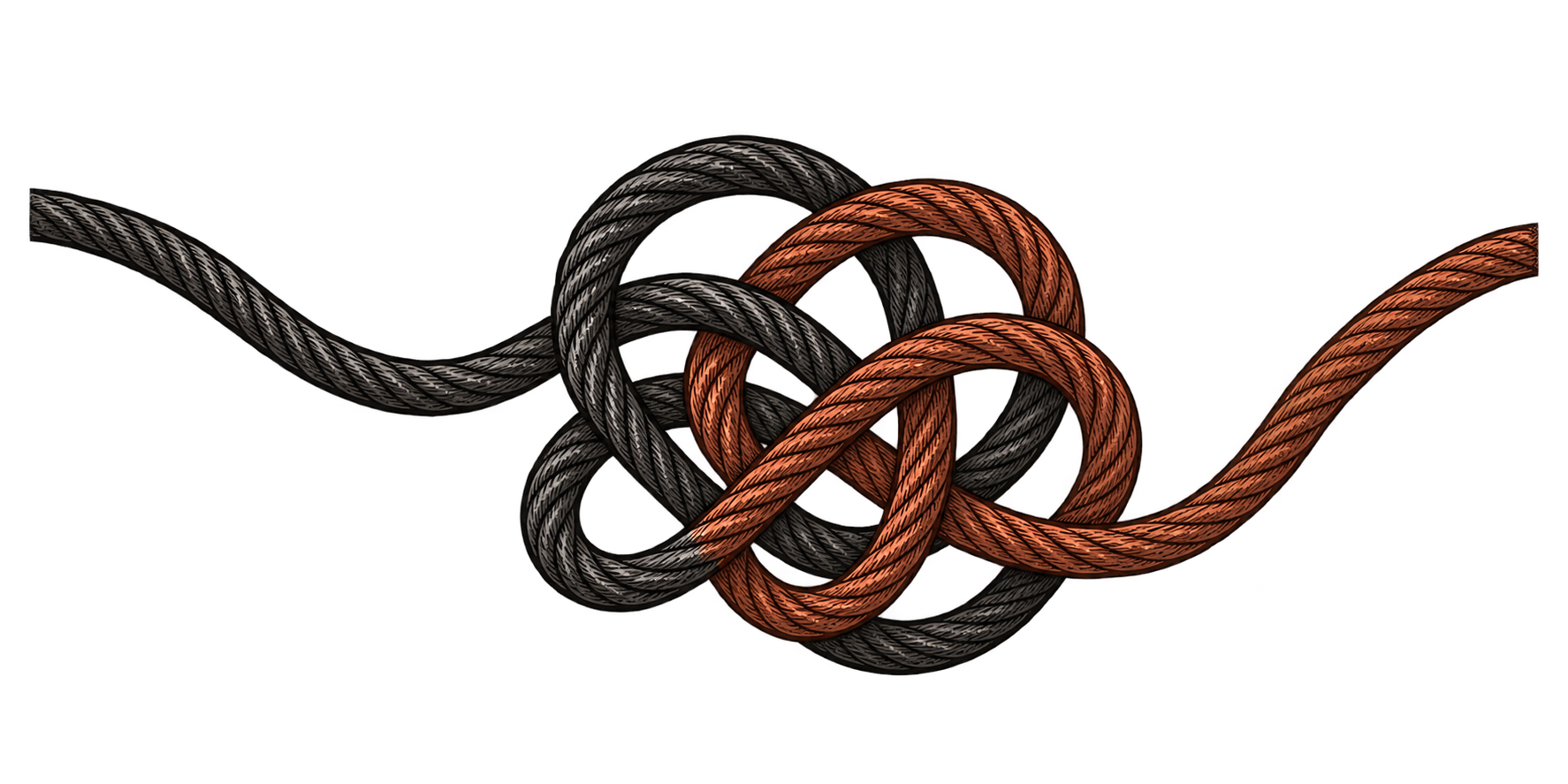
Everyone carries a wound. No one is exempt.
The word makes it sound like one event, and sometimes it is. More often it's an accumulation. All the moments you set some part of yourself aside to stay connected to the people you needed. Each moment was small. You noticed what was welcome and what wasn't, and you adjusted. Most of them you wouldn't remember now. Together they left a mark.
Most of what we're taught about a wound like this is how to manage ourselves so we don't have to feel it. Get past it. Build on top of it. Put it to work. The wound doesn't cooperate with any of that.
My brother killed himself when I was a young man. That's one part of my wound. I can wish it away. I can ignore it for a few days. Then it's there again, and my work is to meet it: to feel the pain and, at the same time, some compassion for myself and for him. Not compassion instead of the pain. Both at once. When I can hold both, the pain lessens a little, and a little more of me is present than was before.
I want to be careful with the word sacred. I don't mean the wound is a gift. Losing my brother was not a gift, and I won't call it one. I mean the wound deserves attention rather than management. Every place you set yourself aside is held there, so it's also a fairly precise record of what you left behind.
Which is what the title means by genius. Not magic, and not some hidden talent the wound was guarding. Just this: the effort that goes into keeping a wound covered is enormous, and you've been paying it so long it feels like nothing. When the wound gets real attention, some of that effort is freed, and what you set aside to stay connected starts to become available again. Slowly, in my experience.
Mine is still coming back.
I wrote a book about that. The first chapter is twenty-eight minutes, read in my own voice. Enter your name and email and I'll send it to you.
Fifteen minutes with one moment of your own.
TRY THE WRITTEN REFLECTION SEND ME CHAPTER ONE